SIP SMARTS & KNOWLEDGE
Oh Sip! Which Wines Go With My Holiday Meal?
By: Laurie Collins, Co-Founder of Sip Happens
It’s finally that time of year. Whether you have impatiently waited for season of celebration or this year has flown by and the holiday season is swiftly upon you, Thanksgiving is just around the corner – and that means Christmas isn’t far behind.
Are you serving ham, turkey or both? How about shaking it up with pork tenderloin or perhaps a nice prime rib for Christmas? Deciding on the protein and the sides is difficult enough; now how in the world do you choose wines for these epic holiday meals? Sip Happens can help take the mystery out of which wines work best with your dinner.
Thanksgiving can be a double-edged sword. Between the meat of choice and the array of sides served, this meal can cause a plethora of conflicting flavors. The good news is that you can choose a variety of wines to enjoy with this mash-up of cuisine.
No matter what foods grace your table for your festive feast, the choices are limitless when it comes to wine pairings. Be sure to set both a white and red wine glass at each place. Have fun and experiment — find a new favorite wine to go with your favorite holiday dish!
TO START…
■ Sparkling wine and champagne cocktails are a great way to welcome your guests. Begin the celebration with Paul Roger Réserve Brut, a lovely French Champagne. A less expensive option and one that works well in champagne cocktails are Villa Sandi II Fresco Prosecco, an Italian sparkling wine. Another budget-friendly alternative is Isaac Fernandez Biutiful Cava Brut Nature, a sparkling wine from Spain.
Appetizer Wines
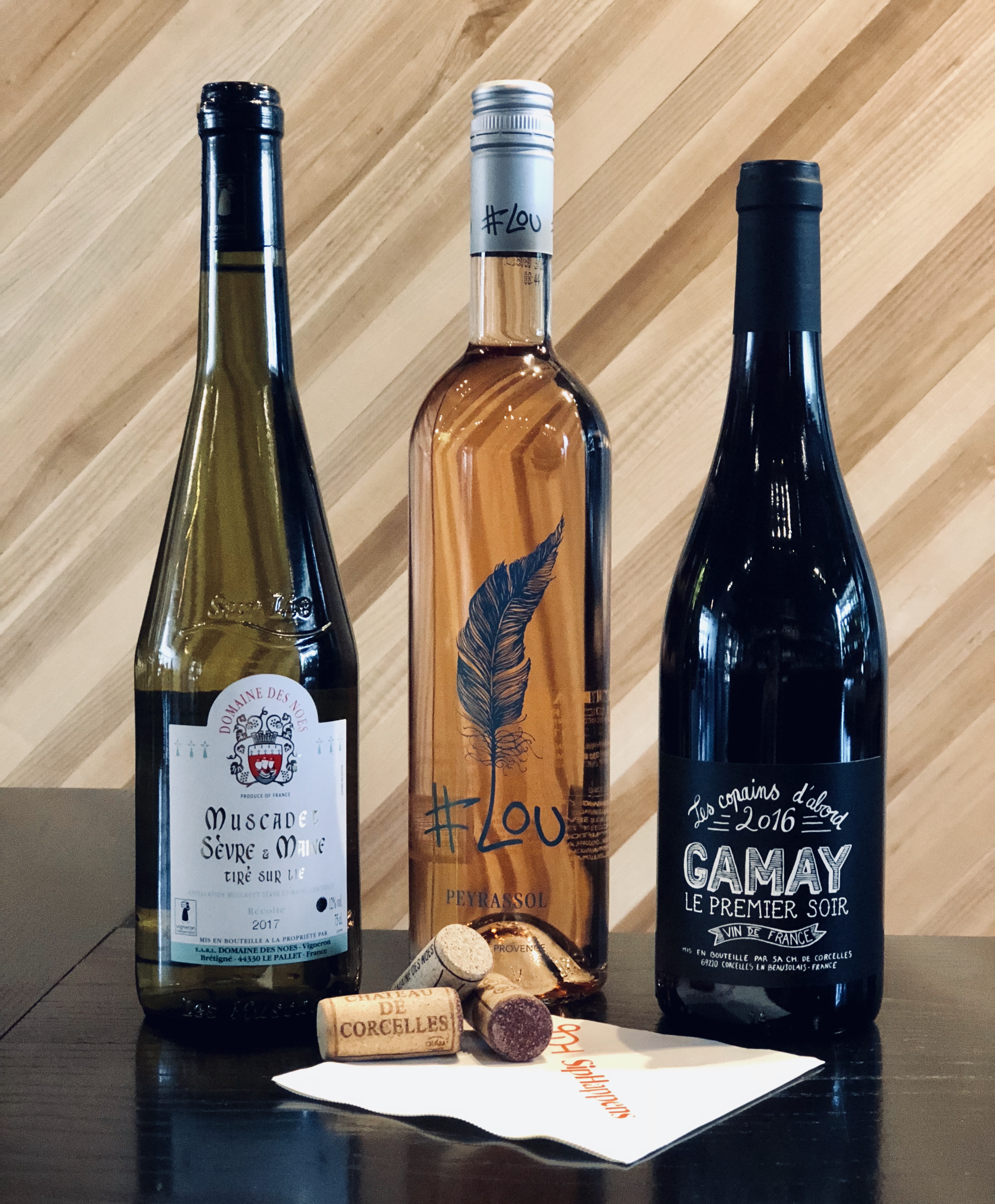
■ If you plan to serve appetizers, keep it light — there’s a lot more food on the way! Serving a Smoked Salmon Canape or Shrimp Ceviche? Try Domaine de Noes Sèvre-et-Maine, a Muscadet or Seghesio Family Vineyards’ Vermentino. A Baked Brie Stuffed Pastry would match perfectly with Chateau de Peyrassol #Lou, a lovely Dry Rosé or Chateau de Corcelles Les Copains d’Abord, a fresh, ripe Gamay.
Wines That Go With Turkey
■ When turkey is the star of the show, you’ll never go wrong with another glass of the dry Rosé. If you’re looking for an interesting, lighter red, keep pouring that Gamay. Its subtle, earthy notes pair fantastically with turkey.
Wines That Balance Basic Side Dishes
■ While turkey may be the headliner, there are many other flavors to take into account with the supporting cast. From rich sauces to herb-filled stuffing and roasted veggies, you’ll want to pair wines that balance with the side dishes. Reichsrat Von Buhl Armand, a dry Riesling because of its acidity and slight sweetness, works with turkey and mashed potatoes with gravy. It also pairs well with cranberry sauce. St. Supéry Blanc Dollarhide, a Sauvignon Blanc, is a top pick for turkey and savory sides.
Pairing With Ham
■ If ham is your protein of choice, you’ll want to pair wines that can stand up to the sweet and salty richness of this holiday staple. Philippe Brisebarre Sec, a classic Loire Valley Vouvra, or Reichsrat Von Buhl Armand, a German Riesling, will bring food-friendly acidity to the table. When choosing a red, stay on the lighter side. You’ll never go wrong with Chàteau Moulin-à-Vent Couvent des Thorins, a Beaujolais, or Illahe Vineyards Pinot Noir. If you’re feeling adventurous, try Denny Bini dell’Emilia, a Lambrusco that is slightly sparkling and a great balance with pork. Depending on preparation, a pork tenderloin would pair nicely with Trimbach, a Gewürztraminer or a velvety soft Seven Hills Winery Merlot.
Wines to Serve With Prime Rib
■ If your holiday meal is centered around a prime rib, Les Cadrans de Lassègue Bordeaux is a classic choice. Unity, a full-bodied Cabernet, or the robust Duckhorn Vineyards Merlot make beautiful companions to this richer protein.
Bottom line – don’t be intimidated by pairing the perfect wine with these traditional holiday meals. Experiment with these wines and discover what you enjoy most. At Sip Happens, we’ve made boutique wine simplified. Stop by and let us help you pick out the perfect bottle for any occasion. With more than 300 wines to choose from, we make great wine fun and accessible to everyone.
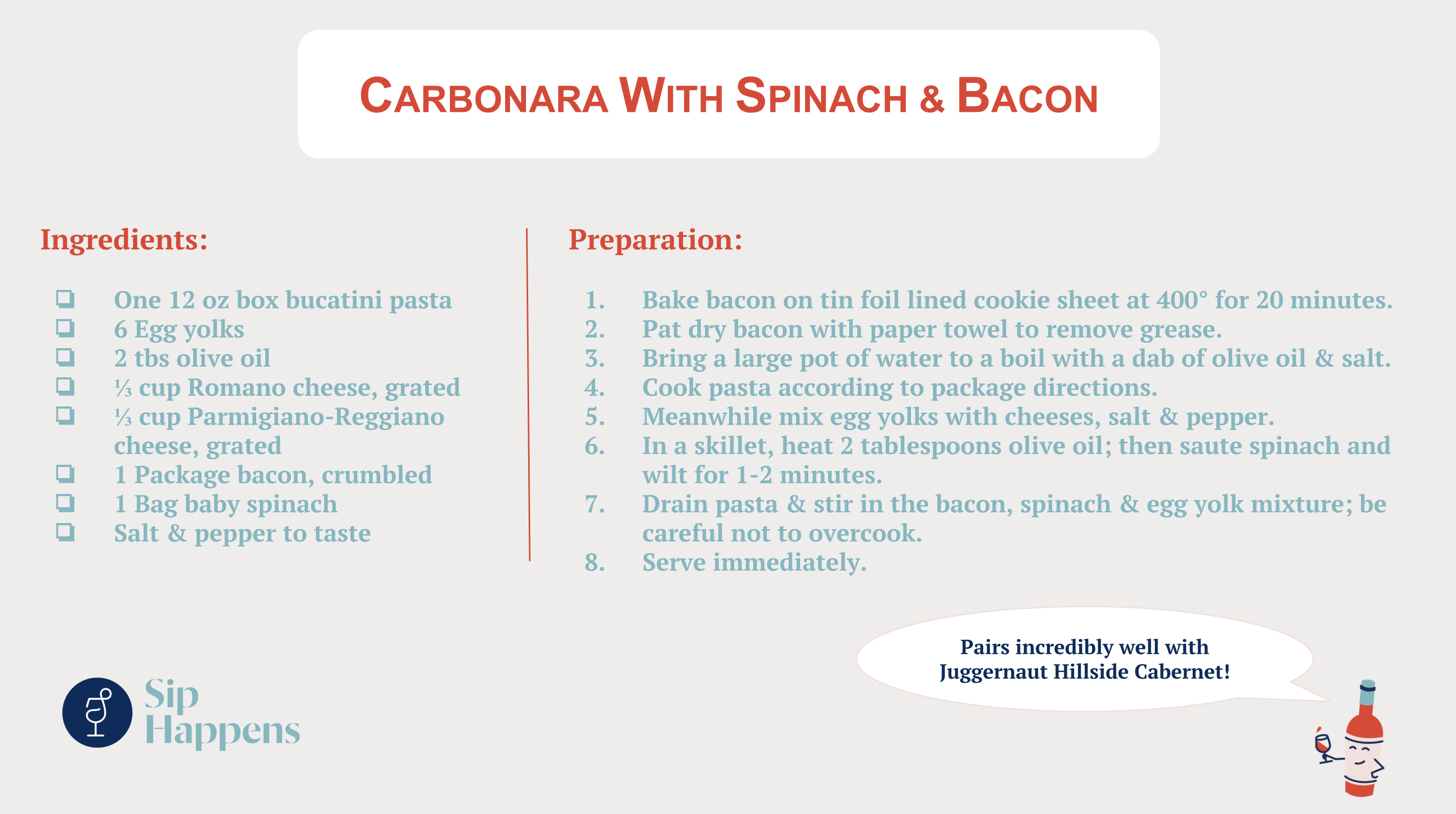
Carbonara with Spinach & Bacon
Enjoy this classic Italian pasta dish with a bottle of Juggernaut Hillside Cabernet.
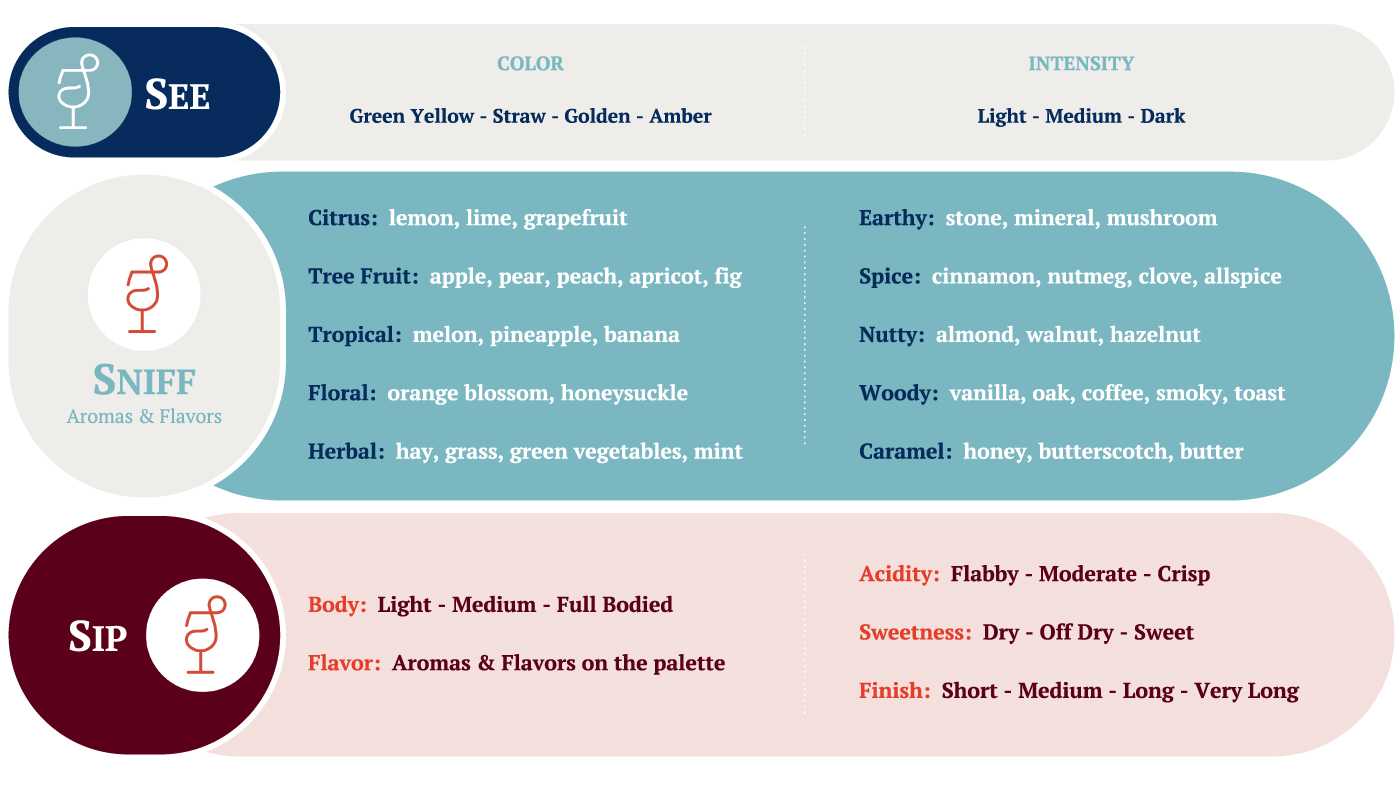
White Wine Tasting Notes
Use this simple chart to help you get the most of your next sip.